Showing posts with label Kerala. Show all posts

Monday, December 19, 2016

Kerala Kattan Kaapi (Black Coffee)


The early morning Kattan Kaapi is one of the most followed rituals in a Keralite family.    So it is for most of the keralites settled outside Kerala too.    And for this one cup, they would buy an entire year's ration in one go during their annual visit to Kerala.    The kattan kaapi evokes feelings of nostalgia and an invisible  bond towards their hometown and the place they belonged to once upon a time!  

This one concoction in the morning satiates and helps them to keep going for an entire day.  The rest of the day can then be dedicated to the lesser preferred tea in any form...  plain tea, tulsi tea, ginger tea, green tea, etc.

The special taste and aroma of the kattan kaapi can only be achieved with the special South Indian coffee powder that is available in South Indian stores outside kerala.      Though the preparation of this simple beverage is equally simple, many don't get it right.  It is the proportion of the sugar and coffee powder that matters. 

This cuppa is supposed to be high on sugar and coffee powder both..  but the preparation is slightly tricky.  The coffee powder should not be so strong that it starts turning sour in the mouth or so light that it becomes tasteless and watery.  So, it has to be prepared carefully.   Some people prefer the coffee powder straight – the coffee beans roasted and powdered just as it is, but there are others who prefer the coffee powder with a little chicory added to it.  Both tastes equally good. 


A very simple method of preparation - in one cup boiling water, add one heaped teaspoon of sugar and then one not so heaped teaspoon of coffee powder.  It usually takes me atleast two three preparations per coffee powder that I buy new, to get to the right proportion to follow for the rest of the days..  so, essentially it is about practice!!!

Wednesday, November 30, 2016

The Iron Man of Kerala

It was when I was last visiting my mom in Kerala, I got to see him in person.   My mom used to tell me that he comes every fortnight to see if they need his services.   

But nothing had prepared me for this!


This was a completely new concept! 


In earlier days, we used to do all our ironing at home.  I only remember the good old electric iron and then came the steam irons which were a little more comfortable and helped us get a wrinkle free appearance.  Once we came to Delhi, there were people doing the ironing for an entire colony.  They would come and collect washed clothes from our home and take it to their shed which was usually in one corner of the colony.   They would  iron  all the clothes and keep them separate – house by house so it is easy for them to take it back.  And they would charge some money for this service – it started off from Rs.1/- per material to now almost Rs.10/- per cloth.  One gets to know the rate of inflation from these price rises!!

In Kerala, when we used to go as children, I remember having seen this iron metal box.  My grand mother and Aunts would put hot coals into this box so it heats up.   And this was used to iron the clothes then.


So, this complete transformation from ironing at home and then giving it to someone else to take the clothes for ironing to now a person coming with all the paraphernalia to your doorstep to do the service for you, was completely new to me.


It is a complete set.  The iron, the iron board, coals, etc.  The only thing he would need is clothes that my parents were ready to give and some water so he could spread it on the clothes for the steam effect.


Once he got the clothes, he would fire up the coals, and transfer them into the iron and then get busy with the work.   Once done, he would handover the clothes and collect his money and leave!!


Saturday, November 26, 2016

The Hill Station of Kerala – Munnar


A visit to Kerala is incomplete without visiting the famous hill station of Kerala called Munnar.  It is part of the Western Ghats falls in the Idukki district.  The name Munnar actually means three rivers.   This is a place where 3 rivers (Mudhirapuzha, Nallathanni and Kundaly river) come and join together.

During one of our annual vacations to Kerala, we made this journey to Munnar by renting a car.  It takes about 3.5 hours from Kochi via Adimali.   It is an uphill drive through a natural forest with a view of the most picturesque valleys and waterfalls.


 As you climb up, you can see the clouds on top of the mountains enveloping the peak and then slowly as you keep going up, you can feel the clouds kind of settling in on you as well.  It is a wonderful feeling when you realize that you now are part of the clouds that you saw when you were down.   As you come closer to Munnar, you can see the landscape has changed into smooth slopey mountains, trimmed and parted in columns and squares.  The tea gardens are spread wide across mountains and as you inch closer to Munnar, the temperature dips and you start feeling a little cold.

A glimpse of Munnar Town

Munnar is a very small town with houses scattered across the mountains.   You can have a good look at the entire town from one of these mountains.   We stayed at the Mar Thoma Retreat Centre on the Mattupetty Road.   It was a very comfortable cozy place and once we had freshened up, we were on our way to see the Mattupetty Dam, or as some call it, the Madupetty Dam. The dam is nearly 13 Kms from Munnar town. Further ahead is a beautiful tourist spot called the Echo Point. The river enveloped by mountains all around was a beautiful sight to behold.

The catchment basin for the Mattupetty Dam.
Look at the shaven banks that show the level to which the basin fills up when the dam is full.


Mattupetty Dam


Munnar on Google Maps

If you are making the trip from Kerala, the nearest airport is Nedumbassery at Kochi.  The nearest railway station would be Ernakulam or Aluva.  And then take a taxi or cab.  It is about 110 Kms from airport.

Interesting tidbits on Munnar
  • The blooming of Neelakurinji. This tiny blue flower (Strobilanthes kunthianum) blooms every 12 years and spreads the entire mountainscape of Munnar and is a phenomenon worth clapping ones eyes on. The flower with 40 odd varieties bloom mostly in shades of blue, and thus the name. Neela in the local language stands for the colour blue and Kurinji the local name for the flower. The blooming of Neelakurinji usually starts from August and would last up to October. After 2006, we can expect another blooming in 2018. Book your tickets!

Friday, November 25, 2016

A visit to Kochi in Kerala


We usually get into Kerala via Nedumbassery airport at Kochi and therefore Kochi or Ernakulam is the first place that helps us get used to this beautiful lush green countryside.    The ride from airport to the centre of the city takes about 1 hour.   There are multiple options to indulge oneself in once you get to the city…   Depending on what time you get into the city, you could plan for a visit to the marine drive. It is an advisable option to go on a boat ride on the marine drive which is a famous hangout place for kochi people.   The marine drive is built facing the backwaters.  On your ride, you could see different parts of the city - views of sky scrapers, the Bolgatty Palace, the cochin shipyard and the rainbow bridge.   It is serene and beautiful to sit back and enjoy these picturesque scenario.  


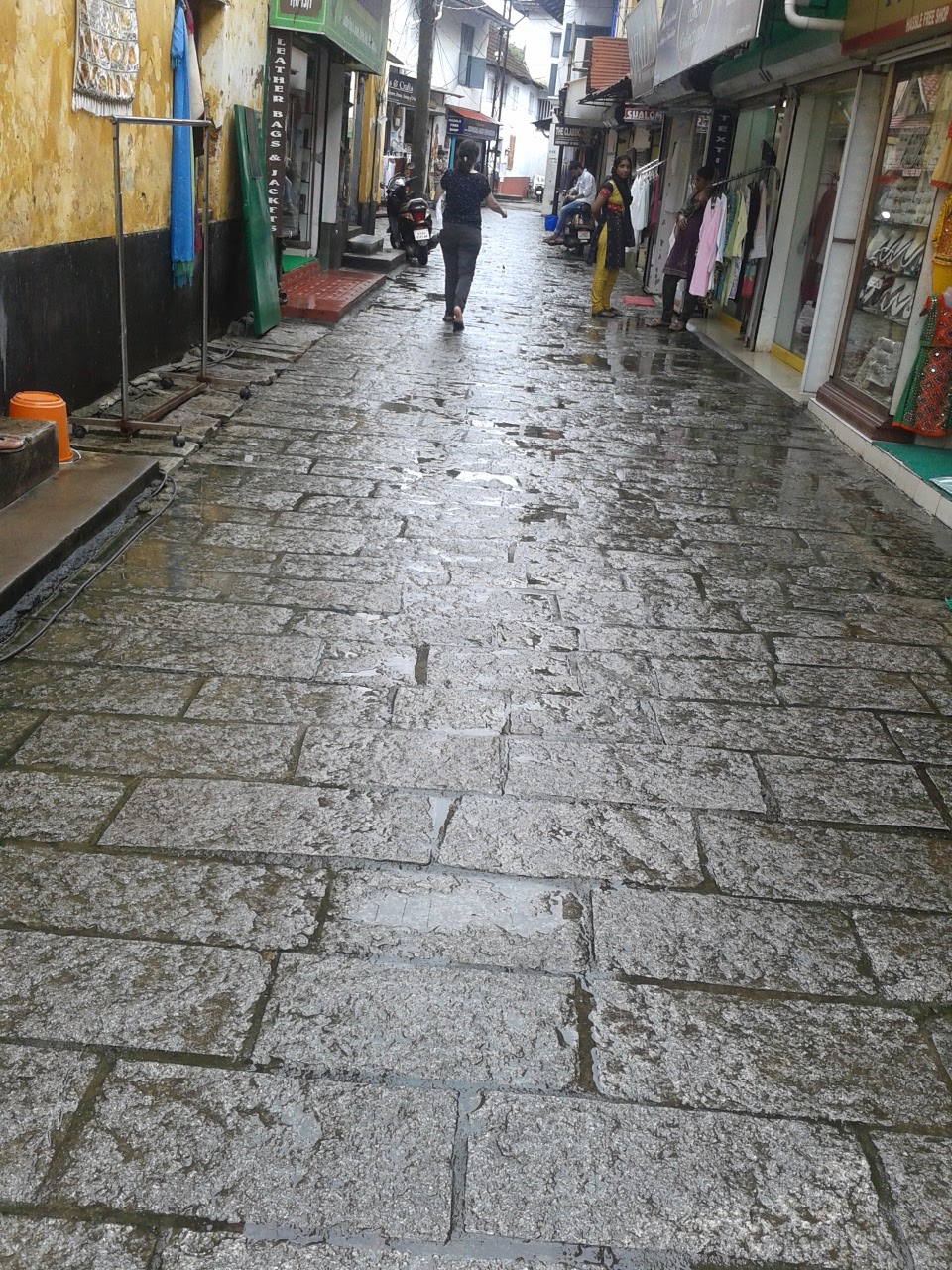
The other place you could make a visit to is Fort Kochi.  A visit to Fort Kochi and Mattancherry peninsula with Jew Town will take more than a day, it is preferable to stay in one of the lodges there.   It is the original Kochi from where the city expanded to the suburbs and now more people live in the other side of Kochi than Fort Kochi.   It is almost like going back in time again.   The small roads, pebbled streets, old buildings, churches, synagogue, cafĂ©, the chinese fishing nets etc. all take you back to an era that one feels a little out of place.  It is as if we are intruding into someone else's life.  But it is an interesting peek, anyhow.


There is an entire spice market along the coast which is part of the fort. You could go around the town during the day to visit the Dutch cemetary, Police museum, St Francis church were Vasco Da Gama was once buried and then head back to the other side of the city by evening.


A walk down memory lane – Trips to Kerala, God’s own Country


Visiting the beautiful countryside of Kerala with its lush green cover was always a source of immense happiness and joy for us as children.    We would start planning for the annual trip much in advance. 


Kerala is a completely different visual experience from any other part of India.  We should prepare ourselves to behold the beauty of the green paddy fields lined with coconut trees, sloping and curving up, waving at them with its huge long leaves.   The rivers and ponds scattered with water lilies and lotus.  Little white egrets, herons and storks can all be seen standing in the fields to pick up their treats from the water below.  There would be all kinds of birds perched up on trees and the electric lines.  Some of the ponds would have a swarm of ducks wading and quacking around.  We  were quite lucky to spot some kingfishers near the ponds perched up on a tree once. 


When we used to go to Kerala during our summer vacations as children, we would get busy with our cousins.   It was a getting together of friends who meet once every year for a few days.   Our days would start off with making excursions to the paddy fields lined with streams of water.  It used to be difficult walking through the siders and our legs would keep going into the mud and slush.  As children who are not accustomed to these areas, we would have to catch hold of our cousins and walk after them slowly.  They were more comfortable as they were used to walking on these slushy areas.  The more slowly we would walk, the deeper our legs would go into the wet soil.   There used to be a lot of fishes, tiny ones and small ones wading in those streams.  We would carry bottles and plastic covers to catch these little tiny creatures.  By the time we all came back from our escapades, we would all be wet from head to toe.  Everyone of us would be scolded and shooed off to clean up and take a bath by our parents.  It was fun watching those little fishes wade in our bottles with clear water for days after that.

As children, we used to take our bath out in the open.    There would be a platform created near the well and it was a community bathing experience!   We would have a bucket and a pulley tied at the top of the well.   It was fun when we had to gather water from the well using these.  We would throw down the bucket tied with a rope and looped through the pulley.  When the bucket hit the water deep down, it used to make a loud noise and then we used to peek down to see the bucket slowly vanishing into the water and then getting submerged.   This was our indication that we had to pull the bucket right up with filled up water.  Pulling on the rope used to be an effort, but each of us wanted to show our might and therefore, we used to take turns to do it and would want to do it the maximum no. of times. We would lift out the bucket with the water and pour it into bigger buckets or else splash it on the others standing around.  And there would be so much squeals of laughter and mirth.  And then our parents would come and scold us for pulling out more water than was needed.  It was another task for the parents to get us all out of our bathing trips.


Once clean and in a little presentable state, we would head towards the kitchen from where lovely aroma would be wafting out. For us who were coming from Delhi, Kerala delicacies prepared in abundance of coconut was a treat!   We would all sit down in a row on the floor and have our meal, sometimes in the traditional way of eating in Kerala, on banana leaf. These days, though the experience has become rare.   Though the elders used a plate, we would insist on having food in banana leaves.  The lunch would be served by the ladies of the house with lots of koottaans (vegetable accompaniments), curries and papadams with rice.  Rice in Kerala is usually the thick red rice.  We would make a little hole in the middle of the rice for the curries and then top it with ghee.  It would be like a little pond and children loved to play even while they were eating. 
   

Every day there were different things to do and experiment.  Our cousins used to take pride in showing off and we were quite eager to just learn from them with all the excitement and wonder.   Our grandmother used to have cows and calves bound in a shed called Eruthil.  Early morning someone from the house would be busy milking the cow and the children all sitting around watching the process.   Then they would play with the little calf that was deprived of his meal for the sake of these children.  There would be hens and lot of chicks.  They would have to be released early morning from their little house called the "kozhikoodu". The chicks were fed with broken rice.  For city dwellers like us, these little chores were all new experiences and we would want to do all these things with the elders.

Some days we would go on an excursion to the open fields where lots of tapioca plants were planted.   There used to be lots of small dragonflies which they would call ‘Thumbi’.   Our cousins would catch them and tie their tail to a long thread and then they would make it fly and we would all follow the Thumbi’s.
The Tapioca Plant

Tree with Jackfruit
 
The pepper plant


Monday, November 21, 2016

The famous breakfast of Kerala - Puttu and Pazaham


One of the most popular breakfast of keralites is the combination of having Puttu with Pazham (Banana).  Kerala is blessed with paddy fields and coconut trees and this dish rightfully claims to represent the Kerala culture and tradition and the agricultural background!  

For people who don't relish a sweet breakfast, kadala (chickpea) curry is the substitute for banana.    

It is a very easy breakfast item to prepare.  It is considered a healthy breakfast too because it is a steamed preparation and no oil is used for cooking.  It is made with rice flour and coconut.  Some people would add a little sugar to this combination if the banana is not very sweet.   Once you mix the banana into the puttu and mash it, it almost becomes a sticky and gooey kind of product.  Then you can make small balls of these and pop it into your mouth where it melts and gives a very good taste of the banana and coconut and cooked rice.

Method of Preparation

For anyone who is interested in preparing this at home, I am giving below a simple recipe.

The rice flour is fried and then cooled.   Then a little water is poured and get a powdery format by slightly wetting the powder with your hands.  There is a specially made cylindrical vessel in which this powder is transferred interspersed with grated coconut.   Place it on a pressure cooker and steam it.  Once the steam starts coming from the top, the puttu is transferred to a plate and serves hot with banana and sugar (optional).  Else with a lentil curry called kadala (chana in Hindi) curry. 

This is a staple breakfast for all malayalis in Kerala.   A very traditional and popular breakfast dish amongst keralites, it doesn’t go very well with north Indian taste unlike the famous Dosa or Idli that they gobble up so relishingly.   It is a little dry, powdery and bland in taste that can make them wonder what in heaven is so tasty about this dish that keralites love so much..  but I guess only a Keralite will understand the true value of this dish.  For me, my mouth starts watering the moment the name is mentioned J


p.s. :  Do write back to me in case you need the exact measures.  Else, you could search on the net to find the exact recipe to follow.

Saturday, November 19, 2016

Bekal Fort in Kerala, India


Bekal Fort is one of the lesser known forts located in the northern part of Kerala.  It is one of the oldest and largest forts of Kerala.  It is part of the Kasargod district of Kerala.

We made a day trip to Bekal Fort from our home in Pathanamthitta District by taking an overnight train that left us at the Bekal Fort Station early morning.  The station was right beside the Beach.  It was very convenient for us to get to the beach and to the fort walking down from the station.  However, since we were on an overnight train, we did not have anything to eat in the morning and therefore went out in search of Breakfast.   This, being a very small town did not have too many options.   There were roadside restaurants that served all Kerala dishes but it was off season.  We went during the monsoon season and therefore the place was less crowded.  We were told that this place is usually flocked till May end when the school kids in Kerala are on vacation!


Bekal fort is a protected monument.   It is a key like structure.  The fort was the citadel of the Kolathiri Raja's of Kerala which finally fell into the hands of Vijayanagiri empire.  It was then taken over by Tipu Sultan and the security features around the fort gives us the impression that it was built to keep an eye on the enemies coming in from the sea side as well as land.  

After our Breakfast in the town, we took an auto to the main entrance of the fort.  Inside the fort, there was an observation tower in the center of the fort with a ramp going up and down.   The walls  that surround the fort went on and on across the length and breadth of the fort.  


The walls were approx 12 ft in height and were very strong built.  We could see the holes that would have been used to keep guns and ammunition by the fort guards.   There was a wider opening that was used to keep tanks.  As we peeked in through these holes and the gaps, we could see the entire stretch of the sea around.  


The fort is surrounded by sea on the west side.  There was a lane that would take you down to the sea and beaches.  The beach on the fort side was rocky. The waves lashed on them with so much fury that it was exhilaratig to look at the lather foaming up as they hit the big rocks. 


The beach near the fort was beautiful and crescent shaped.   It could be accessed by just walking down the fort.  The view of the beach from the fort was also very nice.  We had the whole beach to ourselves and we enjoyed the afternoon sun in the waters.  There were coconut trees lined and a garden adjacent to the beach which also had interesting things for kids.